

Why Can’t I Fall Asleep
This might help somebody, somewhere, fall asleep. Even if it helps just one person, I’ll take the win.
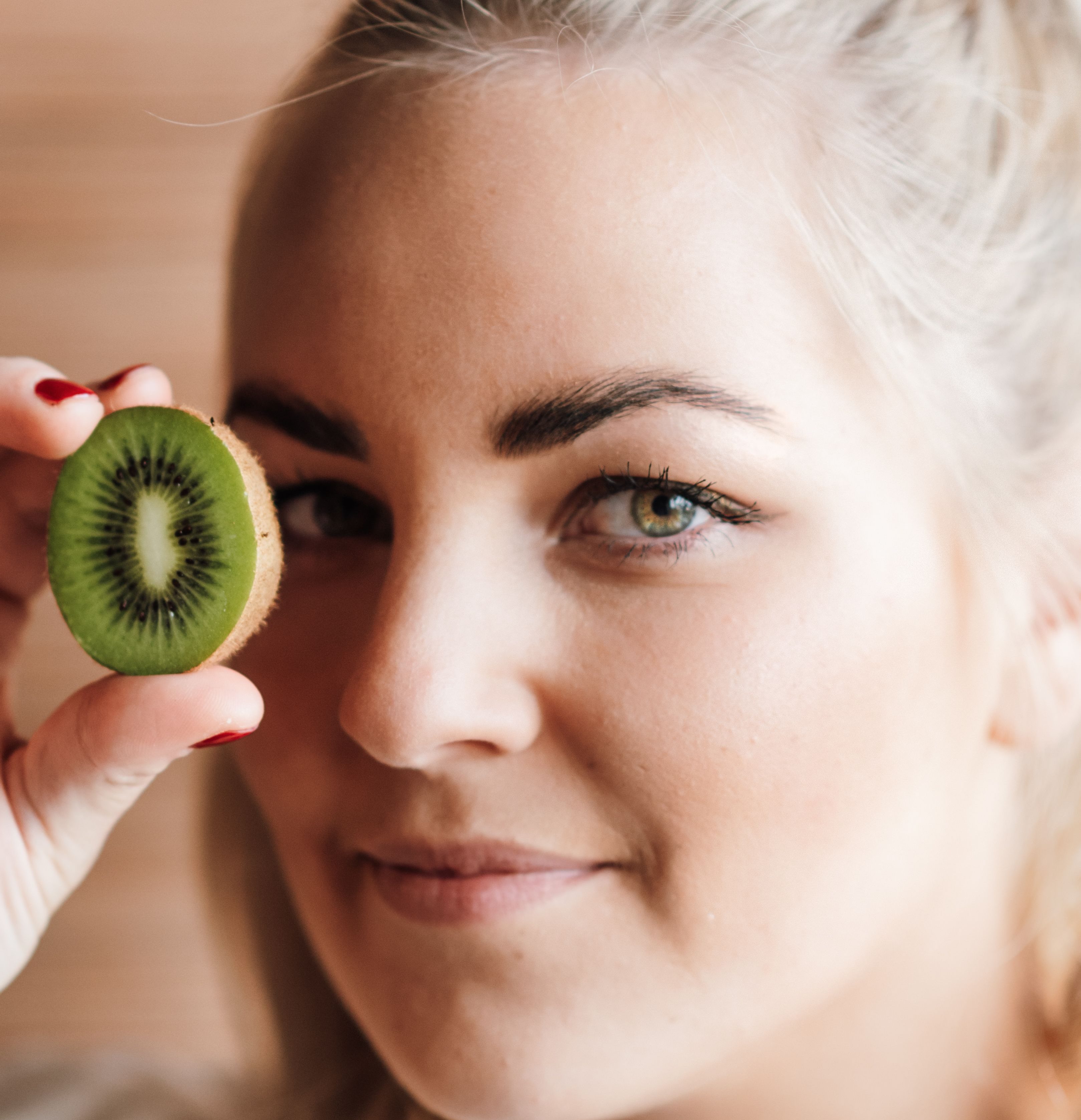
We give you permission to eat before bed.
Reference to study: https://pubmed.ncbi.nlm.nih.gov/21669584/
Lin HH, Tsai PS, Fang SC, Liu JF. Effect of kiwifruit consumption on sleep quality in adults with sleep problems. Asia Pac J Clin Nutr. 2011;20(2):169-74. PMID: 21669584.
Imagine this: A peaceful bedroom at night. A bedside table with two sliced kiwis, a glass of water (because we should all be drinking more water), and a softly glowing lamp. This could be your life. You don’t necessarily need a bedside table, or a softly glowing lamp, or even water to do this one thing to help you sleep better.
Researchers found that eating two kiwis before bed improved sleep quality, sleep duration, and sleep efficiency in adults with sleep problems. Why adults? Because the researchers didn’t want to do a science experiment on kids. It might help kids, but nobody has specifically tracked that data.
Most people think better sleep requires expensive supplements, prescription medications, or complicated bedtime routines. We do recommend one sleep supplement, but don’t blame us! We think it works really well and we are super biased because we make it, but if this doesn’t work for you, maybe the Sleep Better Supplement will? Once again, we are biased because we make it. Moving on…
But researchers discovered something surprisingly simple.
A group of adults with sleep problems were asked to eat two kiwis one hour before bed every night for four weeks.
The result?
✔ Fell asleep faster
✔ Slept longer
✔ Woke up less often
✔ Reported dramatically better sleep quality
All from one simple bedtime snack.
Note: Don’t look at the cherries on the plate in the image below. Yes, it also helps with sleep, but we are only talking about kiwis right now.

👥 24 Adults
With Sleep Problems
↓
🥝🥝
Eat 2 Kiwis
↓
⏰
1 Hour Before Bed
↓
📅
Every Night
For 4 Weeks
↓
😴
Sleep Improvements
Researchers made sure to track participants of this study with sleep diaries, sleep quality questionnaires, and sleep tracking wrist devices.
| Sleep Metric | Before Kiwi | After Kiwi | Improvement |
|---|---|---|---|
| Time To Fall Asleep | 34 Minutes | 20 Minutes | ⬇️ 35% Faster |
| Total Sleep Time | 5.9 Hours | 6.6 Hours | ⬆️ 40 Minutes |
| Time Awake During Night | Higher | Lower | ⬇️ 29% |
| Sleep Efficiency | 86.9% | 91.2% | ⬆️ 5.4% |
| Overall Sleep Quality | Poorer | Better | ⬆️ 42% |
That’s nearly 15 minutes less tossing and turning every night.
Imagine getting almost two extra hours of sleep every week simply because you fell asleep faster.
This also may not sound like very much, but over the course of a month, that’s approximately 20 hours of extra sleep. That equates to almost 2-3 more days of sleep a month.
Many people don’t struggle falling asleep.
They struggle staying asleep. Does that sound like you? Sometimes it sounds like me.
These participants spent nearly 30% less time awake after falling asleep. Meaning fewer interruptions and more restortive sleep.
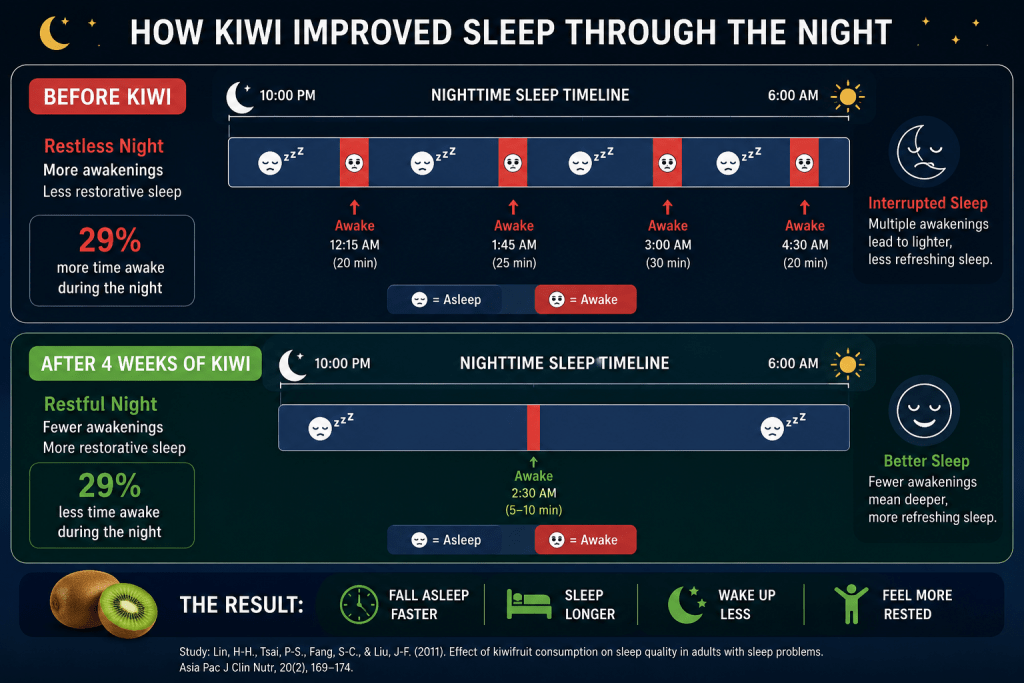
Wondering how Kiwi can help with sleep? It contains incredible nutrients that support sleep!
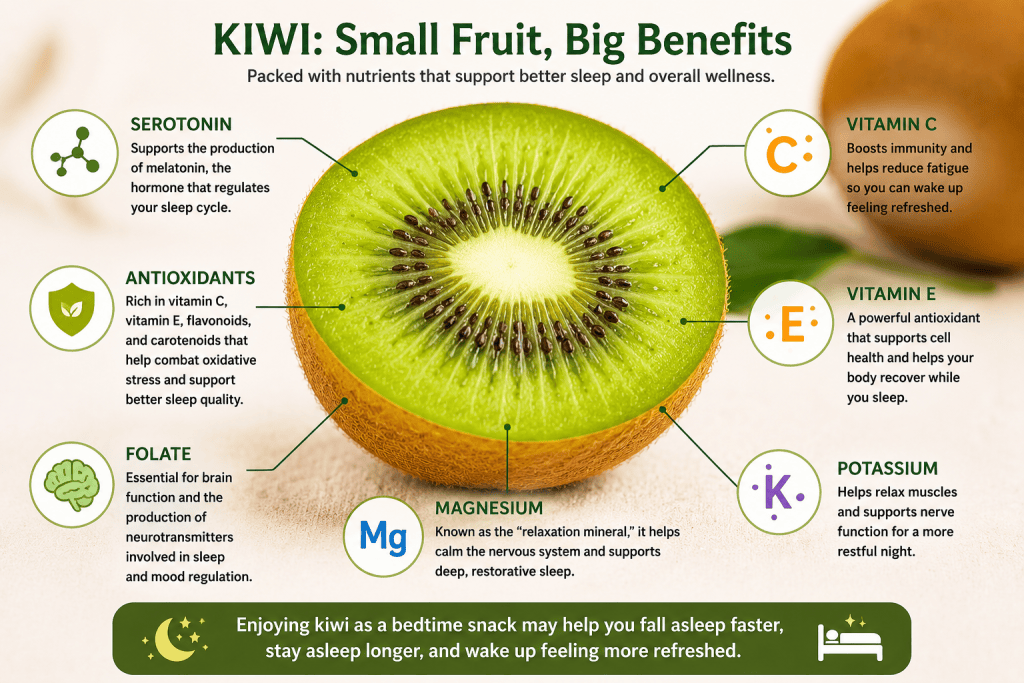
This is crazy. Kiwi actually contains a large amount of serotonin, or the “feel-good neurotransmitter”, but it does more more than affect mood.
Your body uses serotonin to produce melatonin, which helps regulate your sleep cycle. So if you are struggling to fall asleep or stay asleep, chances are your sleep cycle is off, and you body needs to produce more melatonin. Think of serotonin as the raw material your brain needs to create healthy sleep signals.
Serotonin → Melatonin → Better Sleep
Poor sleep and chronic stress increase something called oxidative stress. Oxidative stress is like rust forming inside the body.
Kiwi contains powerful antioxidants that help combat this process, including:
• Vitamin C
• Vitamin E
• Flavonoids
• Carotenoids
Researchers believe these compounds may help support healthier sleep.
Folate is a nutrient involved in brain function and neurotransmitter production.
Low folate levels have been associated with:
• Insomnia
• Poor sleep quality
• Restless legs syndrome
Unlike many foods, kiwi is eaten raw, preserving more of its natural folate content.
For the next four weeks:
□ Eat 2 ripe kiwis
□ Consume them about 1 hour before bedtime
□ Keep your normal routine
□ Track how long it takes to fall asleep
□ Monitor nighttime awakenings
□ Notice how you feel in the morning
Consistency matters.
The benefits in the study occurred after four weeks of nightly consumption.
Let us know if it works for you! Send us a shout out on instagram @biolifemed and we may send you a little gift as a thank you!
Sleep doesn’t always require a complicated solution. In this study, participants simply ate two kiwis before bed. Four weeks later, they noticeably slept better. So if you haven’t gotten our Sleep Better supplement yet, or your current routine just isn’t cutting and you recently went to the grocery store, maybe eat a kiwi.
This might help somebody, somewhere, fall asleep. Even if it helps just one person, I’ll take the win.
We use cookies to improve your experience on our site and only for the sole use of internal website functionality. By using our site, you consent to cookies.
Manage your cookie preferences below:
Essential cookies enable basic functions and are necessary for the proper function of the website.
These cookies are needed for adding comments on this website.
These cookies are used for managing login functionality on this website.
Subscribe now to keep reading and get access to the full archive.